Long before plastic pumpkins and trick or treat, there was Samhain. Every year on the last night of October, people across Ireland put out their fires, gathered on the hills and waited for winter. The dark half of the year was coming, and for one night the line between this world and the next was thought to be thin enough to step through.
Halloween as the world knows it today started here. It travelled across the Atlantic with Irish emigrants, picked up pumpkins along the way, and came back as one of the biggest celebrations on the calendar. Now people travel to Ireland to experience it where it began.
The Lore: What Samhain Was
Samhain (say it "sow-in") marked the end of the harvest and the start of winter in the old Irish year. Cattle were brought down from summer pastures, food was stored, and communities came together to feast before the cold set in.
It was also a night when the dead were believed to walk. Families laid places at the table for relatives who had passed. People wore disguises so wandering spirits would not recognise them. Bonfires were lit to protect homes and livestock.
In County Meath, on a hill near Athboy called Tlachtga, the Fire of Tlachtga was said to be lit on the eve of Samhain. The 17th-century historian Geoffrey Keating wrote that people would assemble there, and that every hearth in the region had to be put out and relit from that one flame. Archaeologists have since found that the hill was a ceremonial and feasting site from the late Bronze Age onwards, so the old stories have some ground under them.
Samhain also has deep roots in Horse Country. In the Fenian tales, a fire-breathing figure called Aillén came out of the otherworld every Samhain, played music that put everyone at Tara to sleep, and burned the hall to the ground. It was Fionn mac Cumhaill who finally stayed awake and defeated him, and was made leader of the Fianna as a reward. Fionn's home, so the stories go, was the Hill of Allen in County Kildare.
The Púca: Ireland's Halloween Horse
If there is one creature that belongs to Samhain, it is the púca. And in most of the old stories, the púca takes the shape of a horse.
Picture a big, dark horse with glowing eyes, appearing on a country road after dark. It would scoop up anyone foolish enough to be out late, usually someone on the way home from the pub, and carry them on a wild ride over bogs and ditches before dropping them off, shaken but unhurt, at dawn.
The púca could be a trickster or a helper, depending on the story. It also gave Ireland one of its best Halloween rules: after Samhain, the blackberries belong to the púca. Pick them after 31 October and you will find he has spoiled them. Ask an older Irish relative and there is a good chance they were told the same thing as children.
For a part of Ireland built around horses, it is fitting that Ireland's original Halloween spirit was one.
How It Changed: From Turnips to Pumpkins
When the Church set 1 November as the feast of All Saints, the night before became All Hallows' Eve, later shortened to Hallowe'en. The old customs carried on underneath the new name.
One of those customs was the lantern. In Ireland, people carved faces into turnips and placed an ember inside to light the way on Halloween night. The story behind it is the tale of Stingy Jack, a blacksmith who tricked the Devil twice. When Jack died, neither heaven nor hell would take him, so the Devil gave him a single burning coal to light his way, and Jack carved out a turnip to carry it in. He has been wandering ever since, and that is why we call it a jack-o'-lantern.
During the 19th century, Irish emigrants brought Halloween with them to America. They found that pumpkins were much easier to carve than turnips, and the rest is history. Costumes, trick or treat and the jack-o'-lantern all have Irish roots, even if they came home looking a little different.
Popular Places to Celebrate Halloween in Ireland in 2026
Derry Halloween (28 October to 1 November). Europe's largest Halloween festival celebrates its 40th anniversary this year. It started as a single fancy dress night in a pub and now draws over 100,000 people, with the Awakening the Walled City trail lighting up the 400-year-old city walls, a carnival parade and fireworks.
Púca Festival, Trim and Athboy, County Meath (29 October to 1 November). Named after Ireland's shape-shifting spirit and held in the shadow of Tlachtga, Púca is a celebration of Samhain through music, fire, food and storytelling. It is one of the flagship events of Ireland's Home of Halloween programme.
The Hill of Ward (Tlachtga), Athboy. Even outside festival nights, standing on the hill where the Samhain fire was said to burn is a good way to feel the age of it all. On a clear day you can see across to Tara and Loughcrew.
Kilkenny, Limerick and the Midlands. New for 2026, Galway's Macnas are bringing a large outdoor spectacle called The Cailleach to Kilkenny, Limerick is hosting a new Samhain Banquet, and Longford and Westmeath have a Samhain Trail and a procession in Athlone.
The Irish National Stud & Gardens, Kildare (24 to 27 October). Closer to home, the Irish National Stud is running its Halloween Extravaganza over the mid-term bank holiday weekend, from 11am to 3pm each day. Expect a Haunted Mansion, a Witches' Potion Quest and spooky games, all included with general admission, so costumes are very much encouraged.
Make the Most of Halloween in Horse Country
Mid-term break gives families a week off, the countryside is at its autumn best, and the evenings draw in early enough for a proper bit of atmosphere. Kildare and Tipperary are full of old stories, old buildings and, of course, horses. Here is how to build Halloween around them.
For Families
The Irish National Stud & Gardens
Time your visit for the Halloween Extravaganza from 24 to 27 October and you get two days out in one: the Haunted Mansion and potion quest for the kids, and the paddocks, the Living Legends and the Japanese Gardens for everyone. The gardens look their best in autumn colour. It is also one of the last chances this year, as the stud closes for the winter in November.
Best for: families with young children
The Working Horse Heroes, Lullymore
If you want the real stories behind Halloween, this is the one. Local storytellers Johnny and Ray take you through Lullymore's ancient landscape, a thatched cottage, a working forge and a mud-walled emigration cottage, the kind of home many of the families who carried Halloween to America would have left behind. Along the way you will meet donkeys Jack and Jenny, Kerry Bog Ponies out on the Bog of Allen, and the tiny Falabella horses.
Best for: families, storytellers, anyone with Irish roots
Tipperary Museum of Hidden History and Forge Experience
Stingy Jack was a blacksmith, so where better to tell his story than at a forge? Go behind the scenes of the Tipperary Museum of Hidden History, then watch farrier Joe Channon make a horseshoe by hand. In Irish tradition a horseshoe over the door kept bad luck and bad spirits out, which makes it the perfect thing to bring home at Halloween.
Best for: curious kids, history lovers
For Folklore and Heritage Lovers
Fethard Folklore & Food
The name says it all. Start at the Fethard Horse Country Experience in the 17th-century Tholsel, where stories of the town's horses and horsemen are told through interactive displays, then sit down to a two-course lunch of local Tipperary produce at Sadler's. A walled medieval town is a very good place to spend the last week of October.
Best for: couples, folklore fans, food lovers
Castles, Colts & Culture
The Rock of Cashel comes with its own legend. The story goes that the Devil took a bite out of a mountain to the north, now called the Devil's Bit, and spat it out on the plain, where it became the Rock. Climb up among the round tower, the high crosses and Cormac's Chapel, then carry on to the Fethard Horse Country Museum, a four-course lunch at Sadler's and a guided tour of Coolmore Stud.
Best for: first-time visitors, history and heritage
The Art of Horse Logging Experience
Out at Corderry Farm under the Galtee Mountains, watch horses work the woodland the way they have for generations, then warm up with scones, tea and local preserves. For the full Samhain feeling, take the upgrade that adds a walk to 5,000-year-old wedge and portal tombs, monuments that were already ancient when the first Samhain fires were lit.
Best for: walkers, nature lovers, small groups
For Horse Lovers
Abbeyfield Farm on Horseback
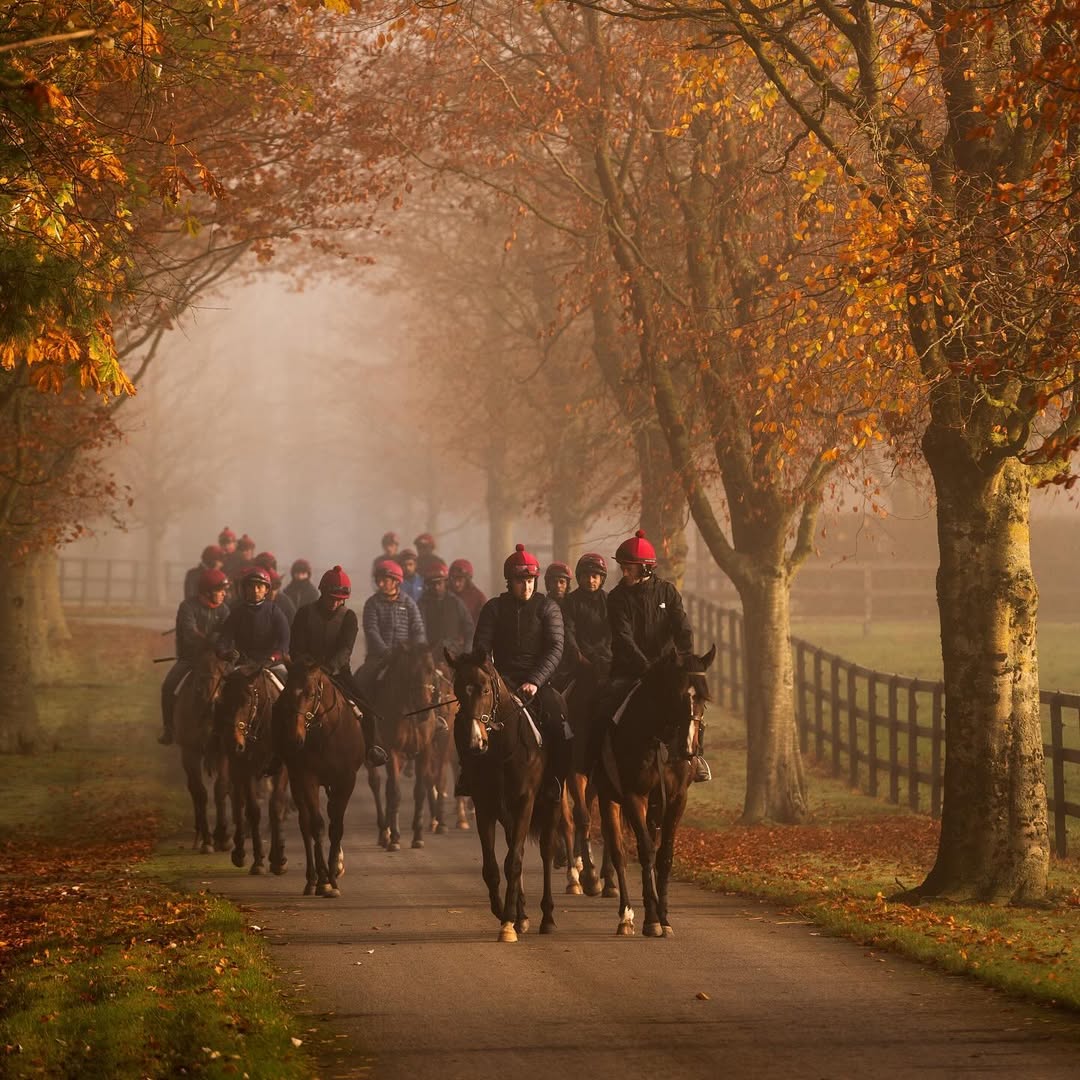
The púca was famous for carrying people off on a wild ride across the countryside. This is the friendly version. You are matched to the right horse for your level, then head out on a one-hour guided ride along cobbled lanes, meadows and barley fields, with views across to the Dublin and Wicklow Hills. On a crisp late October morning, with the leaves turning, it is about as close to the old stories as you will want to get.
Best for: riders of all levels, families with older children
Crossogue Equestrian
A working equestrian yard in Tipperary, and a proper horse lover's morning. Start with tea and scones, watch the horses on the gallops or schooling, then tour the farm on foot or on horseback to see the mares and young horses. Confident riders can add an extended hack, a canter or some cross-country jumping, before brunch and a good chat with the hosts. It is booked by request, so get in touch early for Halloween week.
Best for: experienced riders, horse lovers, small groups
Why Spend Halloween in Horse Country
Halloween was never meant to be spent indoors. It began as a night out on the land, with fires on the hills, animals brought home from the fields and stories told late into the night. Horse Country is one of the few places where that world still feels close. Horses are still part of everyday life here, the farms still run to the seasons, and the stories are told by the people who live them.
Spend it here and Halloween stops being about a costume and a bag of sweets. It is a horse's breath steaming on a cold October morning, hooves on a quiet country lane as the light starts to go, a forge glowing on a dark afternoon, and a story about the púca from someone whose grandmother swore she saw him. For children, it is a Halloween they will still talk about years from now. For anyone with Irish roots, it is a chance to stand where their own traditions began.
The púca has roamed these fields for centuries. This Halloween, come and meet his friendlier relatives.
Just remember to pick your blackberries before the 31st.
Explore all our experiences and book your Halloween in Horse Country.